
One book. A hundred and one skills. Both ways to read it.
The bench, the wood, the metal, the cellar, the hearth, the garden, the land, the medicine cupboard, the cloth, the cold months, the quiet habits. Eleven parts, 101 skills — each with the materials, the current prices, and the step-by-step.

ILLUSTRATED EBOOK + AUDIOBOOK · 413 PAGES · FIRST EDITION
Everything Ezra knows, in print and read aloud.
The sharpening stone. The hand plane. The mortise and tenon. The root cellar in a hillside. The window quilt. Lye soap from rendered lard. The sand oven. 101 skills the Amish still make by hand — with the exact materials, current prices, and step-by-step builds. Read it at the bench, or hear it in Ezra's own voice on the drive to the hardware store.
WHAT YOU GET FOR $67.00:
- The Forgotten Workshop — the ebook— 413-page illustrated ebook, 101 numbered skills across 11 parts, materials lists, current prices, step-by-step builds. PDF and EPUB.
- The Forgotten Workshop — the AUDIOBOOK— Every chapter read aloud in Ezra's own voice, unabridged. Not a narrator, not a machine. MP3 download, yours to keep.
- Total value $94.00
You save 28% — that is $27.00 off buying them separately.
INSTANT DOWNLOAD · PAY ONCE · YOURS FOREVER
Read It Before You Buy It
Two Chapters, in Full
No teaser bullets. Here are two entire chapters, exactly as they read in the book — materials, prices, steps, and all.

Part I · The Workbench · Chapter One
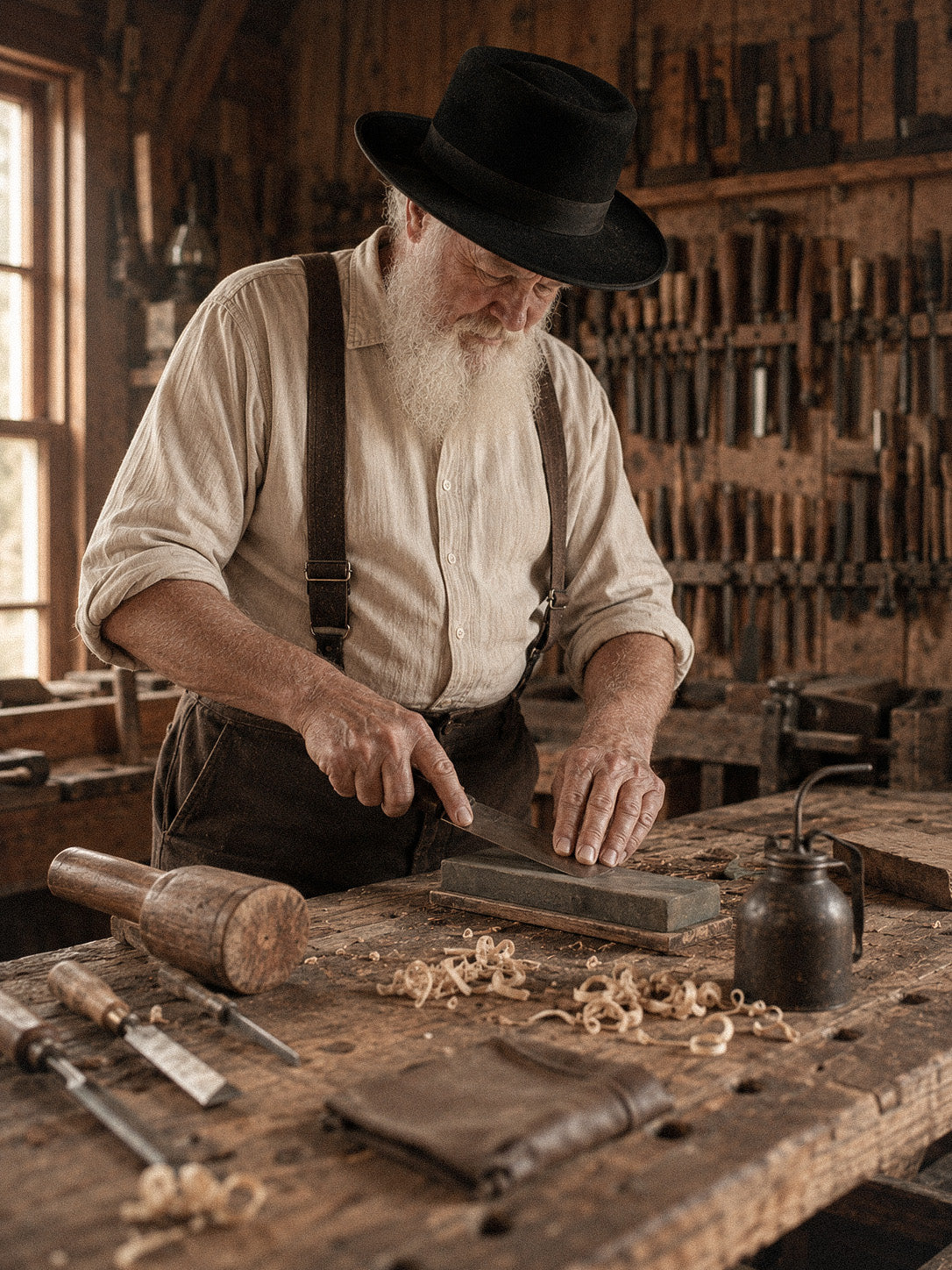
The Stone That Sharpens Anything
Streaming preview only. The full audiobook — every chapter, read aloud — comes with the audiobook edition, or bundled with the book below.
A dull blade has ended more good intentions than laziness ever did. A man tries once, the tool fights him, the wood tears — and he decides he simply is not handy, and puts the whole notion down for the rest of his life. He was handy. His blade was dull. Those are not the same problem, and only one of them was his fault.
My grandfather kept one flat stone by the shop window, and he could put an edge on anything you handed him — knife, chisel, scythe, the neighbor's skates — before his coffee went cold. There was no trick to it. There was only a thing the hardware aisle would rather you forgot: sharp is not a product you buy. It is a habit you keep.
What we forgot. Somewhere along the way, “dull” stopped being a condition and became a verdict. We throw away knives now. We buy blades in packs, use them gray, and bin them — paying over and over for the one thing steel gives away free to anyone with a stone and ten minutes.
You need:
- One combination sharpening stone, coarse on one face, fine on the other — oil stone or water stone (about $30–50 for a good bench stone; it will likely outlive you)
- A few drops of light oil or plain water
- A dull knife or chisel that nobody will cry over — your learning blade
The steps:
- Wet the coarse face with a few drops of oil or water. This floats the metal dust off so the stone keeps cutting.
- Lay the blade's bevel flat on the stone until you feel it sit. That flat contact is the whole secret.
- Small circles, or long even strokes, light as writing your name. Ten or fifteen a side.
- Feel along the back of the edge for a burr — a whisper of raised metal. The burr means the two faces of the edge have finally met.
- Flip to the fine face. Same angle, fewer strokes, lighter still, until the burr is gone.
- Test the old way: slice a sheet of paper held in the air. A sharp edge glides. A dull one folds it.
What it keeps
One stone, bought once, outlives a drawer of “self-sharpening” knives, and every dull blade in the house — kitchen, garden, shop — comes back from the dead for free. In most houses that's tens of dollars a year in replacements and sharpening fees that quietly stop leaving — for the price of ten minutes on a Sunday.
Martha says I sharpen things when I am thinking. She is right — though I have learned not to think too hard near the good chisels.
Part I · The Workbench · Chapter Two
The Plane Older Than Electricity
Streaming preview only. The full audiobook — every chapter, read aloud — comes with the audiobook edition, or bundled with the book below.
There is a sound a hand plane makes when it is set right — a long, soft hush, like the wood exhaling — and a ribbon of shaving rises out of it thin enough to read a newspaper through. The first time you pull one of those shavings, you will hold it up to the window. Everyone does. I have watched grown men do it three times in a row, grinning like boys.
What we forgot. The power planer did not replace the hand plane because it does better work. It replaced it because it does faster work, and we decided fast was the same as good. But a spinning cutter head leaves a surface of tiny scallops that must be sanded smooth, while a sharp hand plane leaves the wood sheared — polished by the cut itself, the grain closed and gleaming. The old furniture you admire in farmhouses was finished that way. No sandpaper. Just an edge, moving.
You need:
- One used hand plane — a “No. 4” size smoother is the classic first plane (a working vintage one commonly runs $30–60; flea markets and estate sales still turn up cheaper fixer-uppers for the patient)
- Your sharpening stone from Chapter 1 — the plane iron is sharpened exactly like a wide chisel
- A scrap of pine or poplar to learn on
The steps:
- Take the plane apart once, slowly, on a towel. Iron, cap iron, lever cap, body. Ten minutes of looking, and it will never be mysterious again.
- Sharpen the iron just as you did the knife — bevel flat, feel it sit, small strokes, chase the burr, then off.
- Set the iron back in and sight down the flat sole like a gun barrel. Turn the depth wheel until the edge peeks out like a hair — you should barely see it.
- Push the plane along the grain of your scrap. If it skips, more blade. If it chokes and stutters, less. You are hunting for the hush.
- When the ribbon rises, stop and hold it up to the window. Go on. It's tradition.
What it keeps
A $40 vintage plane, tuned in an afternoon, does the finish work of a $400 power planer and a lifetime supply of sandpaper — silently, in an apartment if need be, with no dust in your lungs.
My grandfather called shavings like that “angel curls.” I have never heard another soul say it, and I have never once wanted to correct him.
Eleven Parts · One Hundred and One Skills
What's Inside the Workshop
Every skill in its place — the bench, the wood, the metal, the cellar, the hearth, the garden, the land, the medicine cupboard, the cloth, the cold months, and the quiet habits that hold a household together. Choose a part to look inside it.
I · The Workbench
Where every skill in this book learns to begin.
- The Stone That Sharpens Anything
- The Plane Older Than Electricity
- A New Handle for a Dead Axe
- The Workbench You Build From One Tree
- The Oil Rag in a Tin
- Marking Without a Tape Measure
- The Three Hand Tools That Replace a Whole Power Bench
- How to Buy a Hundred-Year-Old Tool for a Dollar
II · Wood & Joinery
Joints that hold before the glue ever touches them.
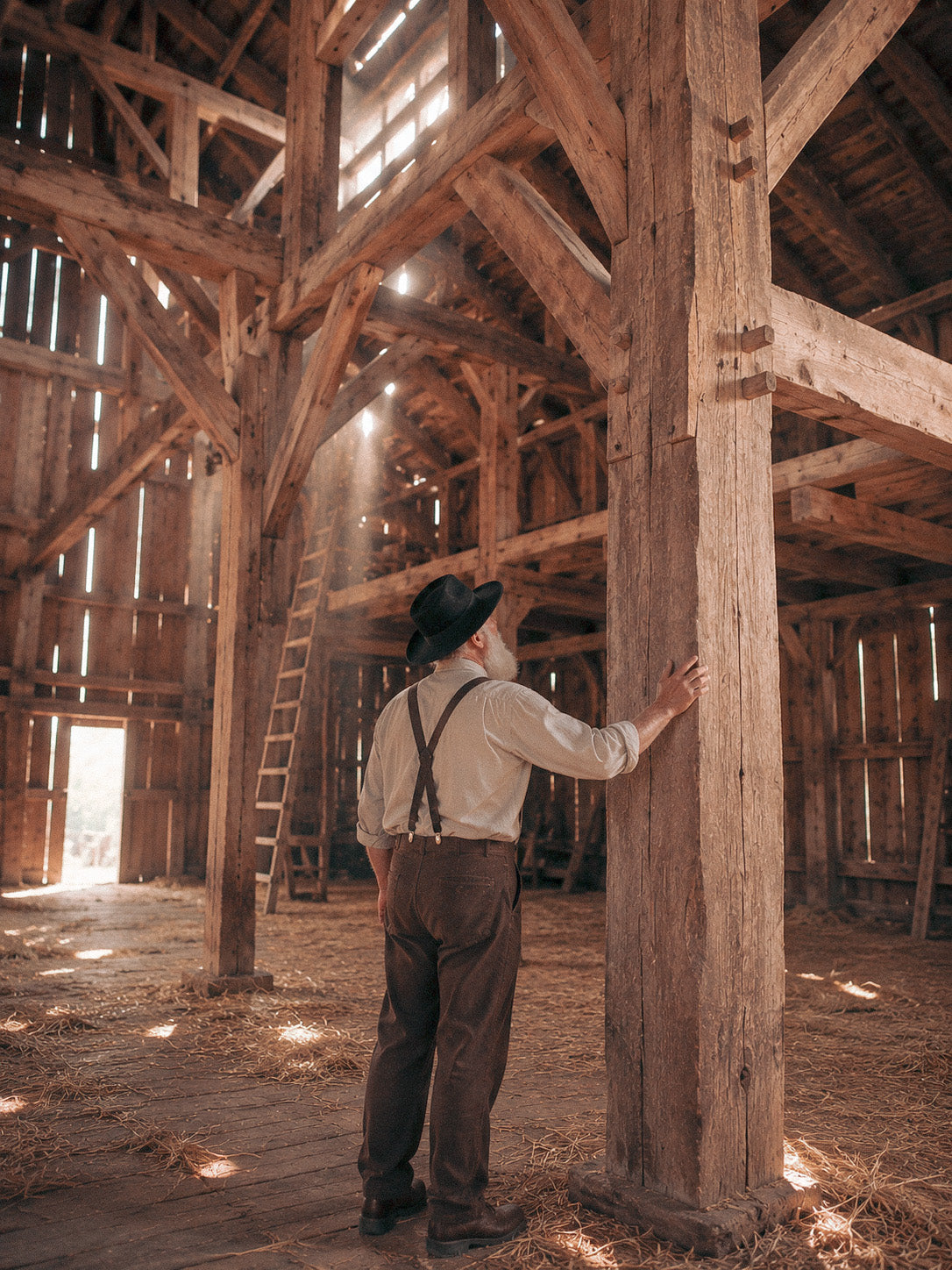
- The Barn Frame Raised Without a Nail
- The Mortise & Tenon, by Hand, in an Afternoon
- The Trunnel — the Peg That Outlasts the Hardware Aisle
- Draw-Boring — the Offset That Pulls a Joint Tight Forever
- The Oil the Old Barns Wore — Linseed, Renewed
- Lime Wash — the White That Breathes
- Steam-Bending Wood With a Kettle and a Pipe
- How to Read a Board Before You Cut It
- The Dovetail That Holds Before the Glue
- Re-Gluing Grandmother's Chair So It Never Wobbles Again
+ 2 more chapters inside
III · Metal & Mending
Fixing metal with no forge and no welder in sight.
- The Three-Dollar Coat That Keeps Rust Off
- Sharpen a Scythe the Way the Old Men Did
- The Cold-Bend — a Hook, a Bracket, a Hinge, With No Forge
- How to Free a Rusted Bolt Without Breaking It
- Bringing an Old Pot Back — Re-Tinning, and Knowing When
- The Stove-Black Rag — Tallow, Ash, and the Old Iron Polish
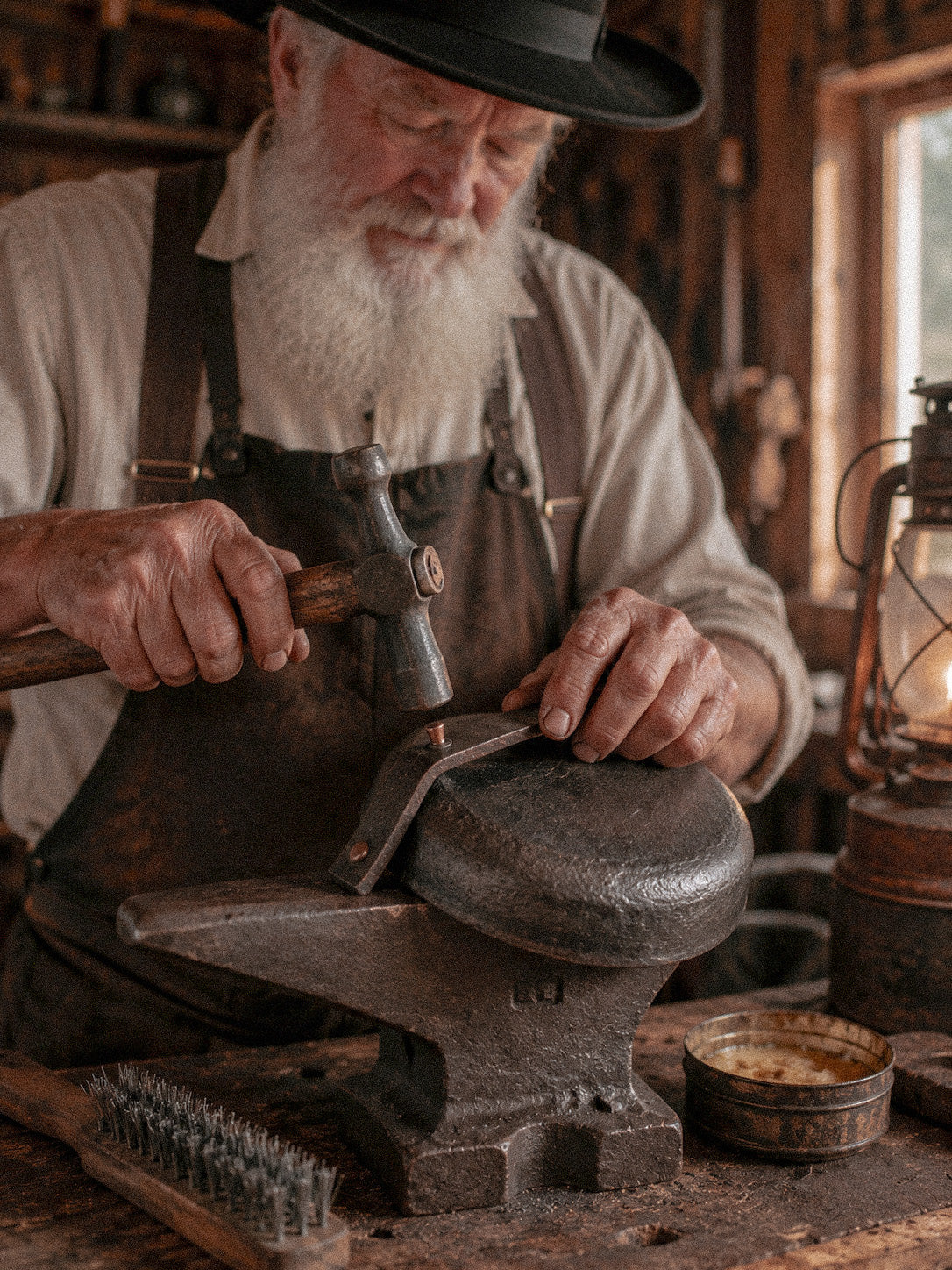
- The Rivet — Mending Metal With No Welder in Sight
IV · The Root Cellar
Putting the harvest up so the freezer isn't the last line.
- The Root Cellar in a Hillside — for About Forty Dollars
- Keeping Butter Cool With No Cord to the Wall
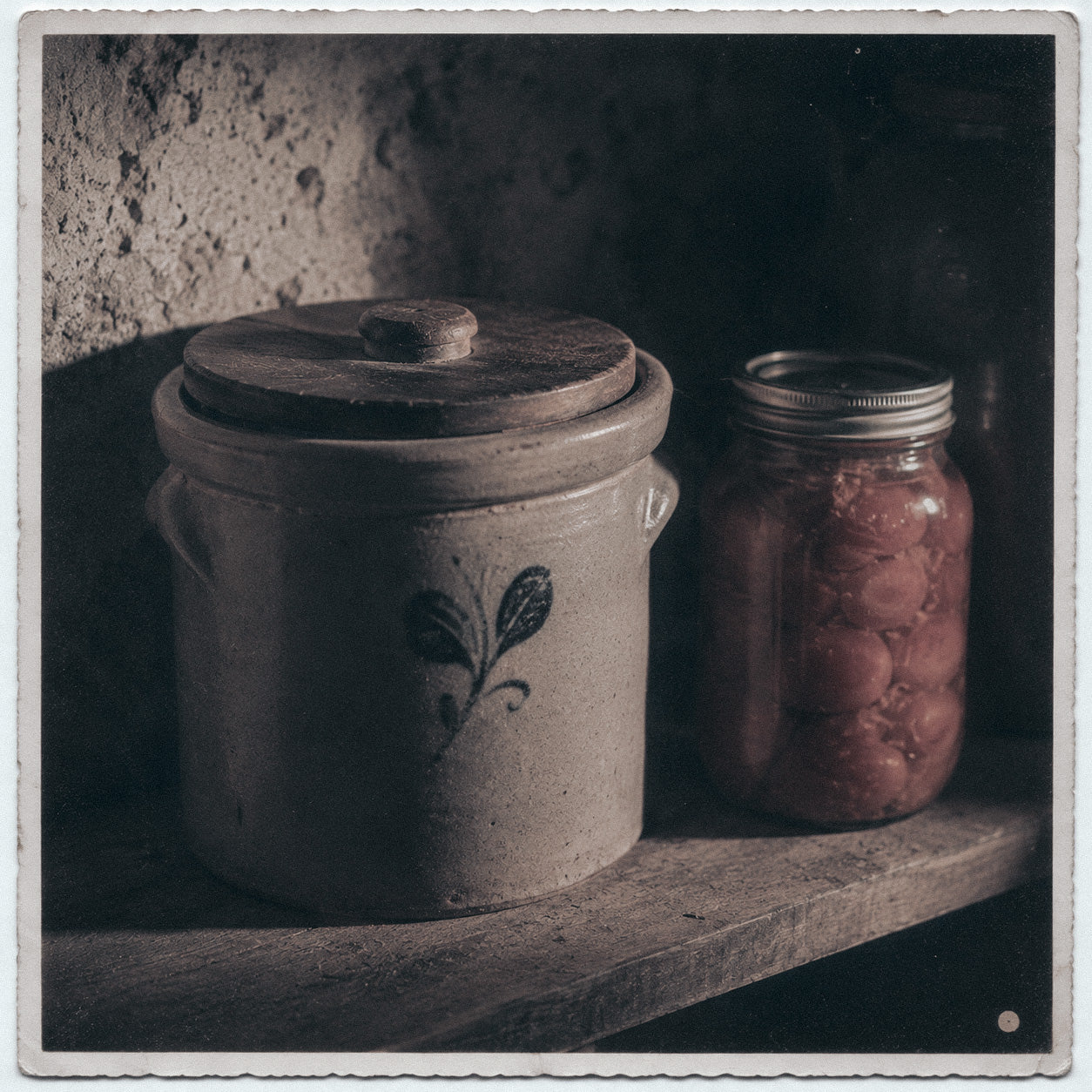
- Sauerkraut in a Crock — the Only Four Things You Need
- Rendering Lard the Way Martha Does It
- Drying the Garden on a String
- The Vinegar Mother — Free Vinegar, Forever
- Eleven Staples That Keep for Years
- Carrots in a Box of Sand
- Apples Through Winter — the Layering Trick
- The Smokehouse You Build From a Barrel
+ 4 more chapters inside
V · The Hearth
Cooking that doesn't need a plug in the wall.
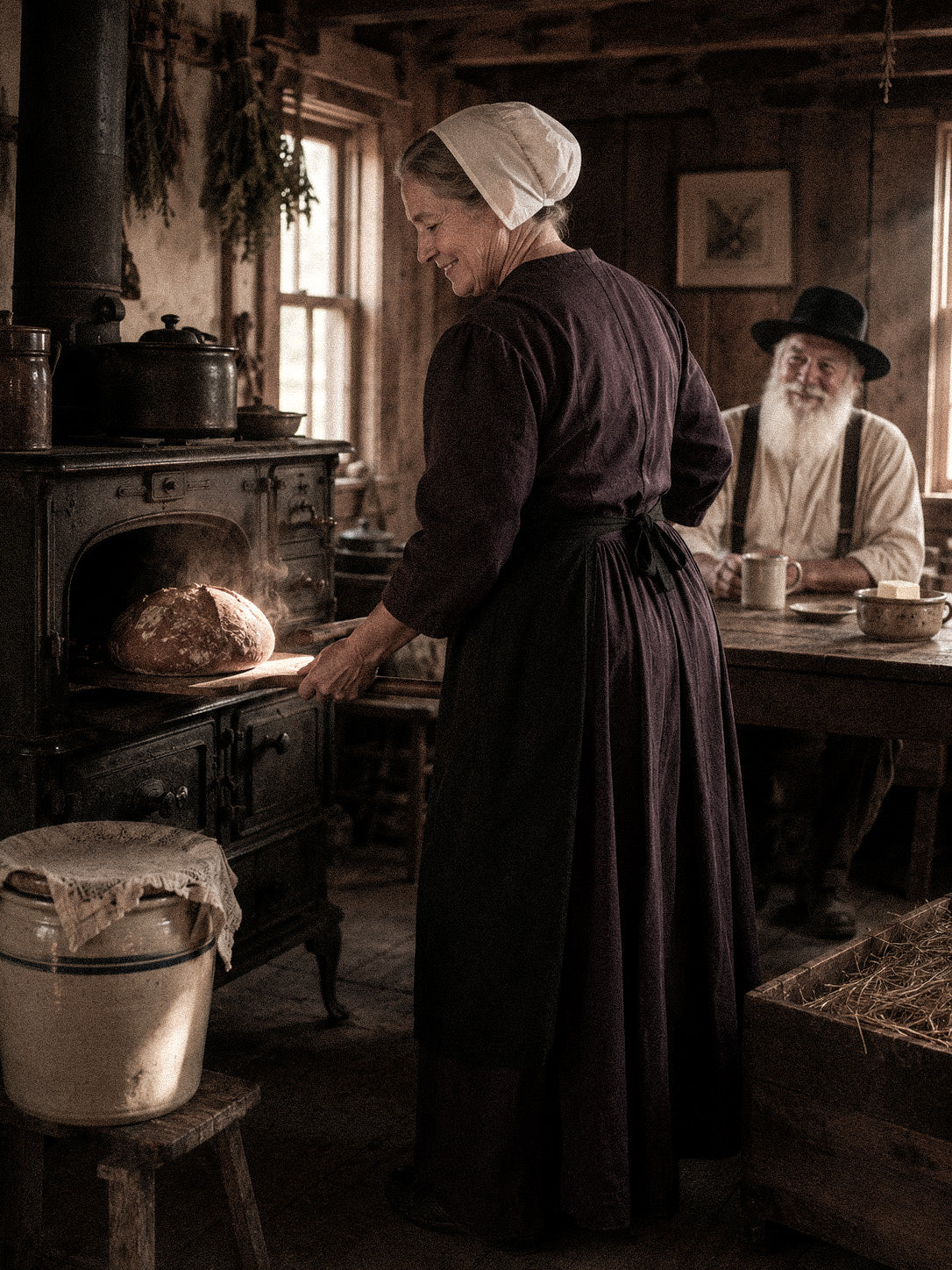
- The Hay Box — One Hard Boil, and the Pot Cooks Itself
- Bread Without a Recipe
- The Sourdough That Started Before You Were Born
- Butter From Cream in Twenty Minutes
- The Soup Bone That Feeds a Family Twice
- Cooking on the Woodstove
- The Cast-Iron Pan That Nearly Cleans Itself
- Molasses, Honey & the Old Sweeteners
- The Cellar-to-Table Winter Meal
VI · The Kitchen Garden
Growing enough that the grocery aisle becomes optional.

- The Potato Bin — the Honest Arithmetic
- The Three Sisters — Corn, Beans & Squash in One Bed
- Starting Your Own Plants
- The Cold Frame — a Box of Borrowed Spring
- Sheet Mulching
- The Weed the Amish Grow on Purpose
- Reading the Almanac
- Chickens as Garden Tractors
- The Rain Barrel That Waters the Row
+ 1 more chapter inside
VII · The Land & The Animals
Buying, fencing, and finding water on ground that doesn't bury you.

- The Fence the Land Grows Itself
- The Forked Stick and the Well Log
- The Hand Pump
- Keeping a Few Hens — the Honest Ledger
- The Draft Horse and the Tractor
- The Skep's True Story
- Reading the Weather Off the Sky
- The Pond
VIII · The Medicine Cupboard
What actually hung above the washbasin — audited, honestly.
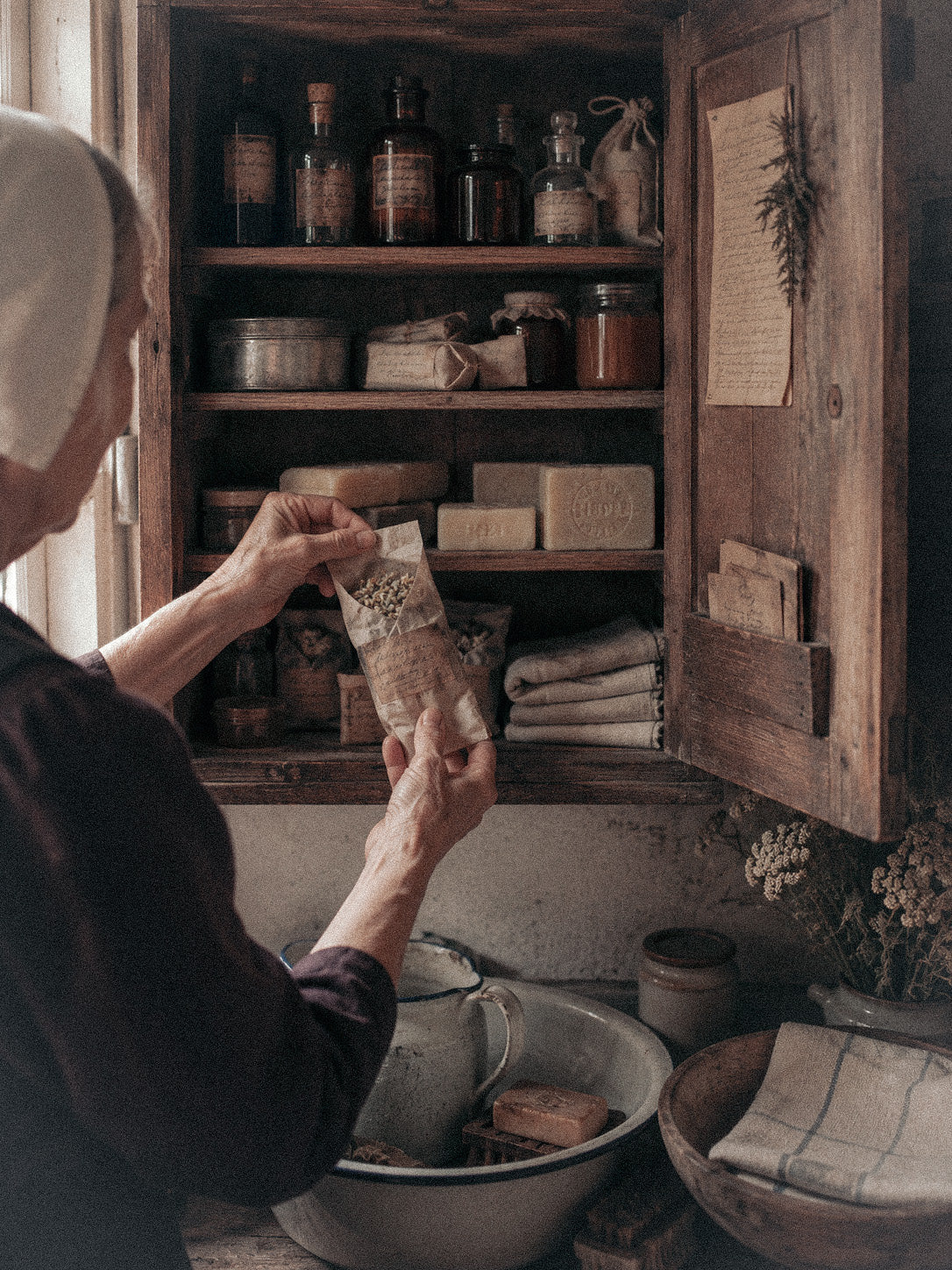
- Lye Soap From Rendered Lard
- The Beeswax Candle That Burns Honest
- The Tallow Salve for Cracked Hands
- Apple Cider Vinegar — the Honest Inventory
- The Herb Drawer
- The Sick-Day Pot
- Honey and the Wound — What's Actually True
- Plantain and Comfrey — the Hardest Lesson
- The Cleaning Cabinet of Four Substances
+ 3 more chapters inside
IX · Cloth, Rope & Hide
The quilt, the cordage, and the patch that holds.
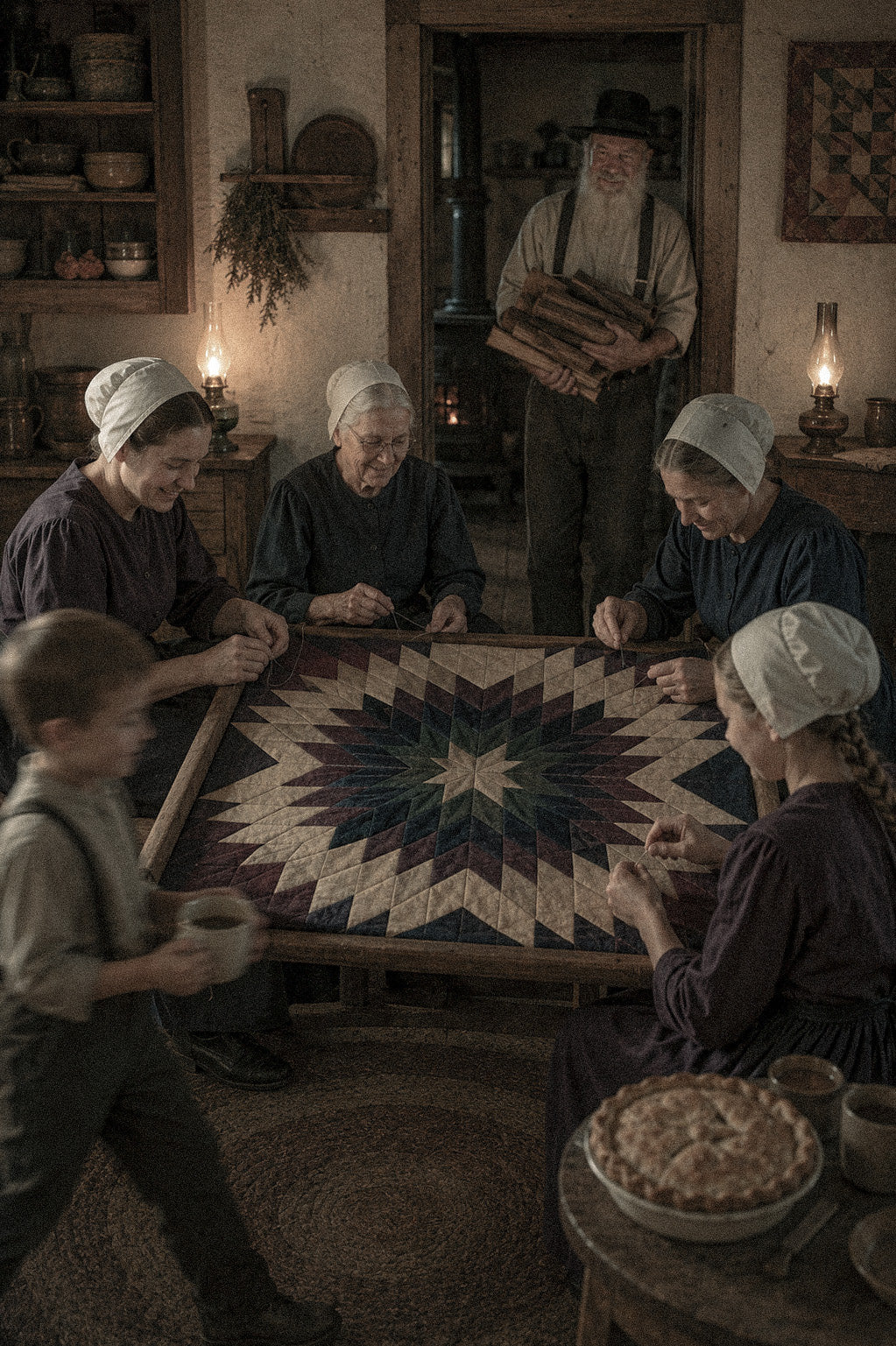
- The Quilt That Outlasts Three Generations
- Rope From Twine
- Tanning a Hide — the Honest Ladder
- Darning a Sock So You'd Never Know
- The Patch That Holds
- Knitting Through a Long Winter
- Oiling Leather So Boots Last a Decade
- The Feed-Sack Dress
X · The Cold Months
The Amish blueprint for a warm house with no furnace.

- Sealing the Drafts — One Honest Saturday
- The Window Quilt — Heat You Can Hang
- The Storm Window
- Blanketing the Attic
- Heat Mass — the Stone That Holds the Fire's Memory
- The Foot Warmer and the Bed Brick
- The Water Heater's Blanket
- The Summer Kitchen
- The Earth Tube — a Beautiful Idea, Honestly Audited
XI · The Quiet Habits
The one skill that decides whether the other hundred survive.

- Twenty Habits Worth Keeping From the Hardest Times
- The Ledger at the Kitchen Table
- The Pantry That Means You Never Run to Town
- The Last Skill — Teaching It to Someone Younger
Prologue
"My grandfather never wrote a single thing down. Not one. Everything he knew … all of it he carried behind his eyes, and when he passed, it went with him into the dark."
So Ezra did the thing his grandfather never did. He wrote it down — every hand skill that kept his household warm, fed, clothed, and mended for seventy years, in materials, prices, and plain steps you can start this Saturday.
Ezra Zook
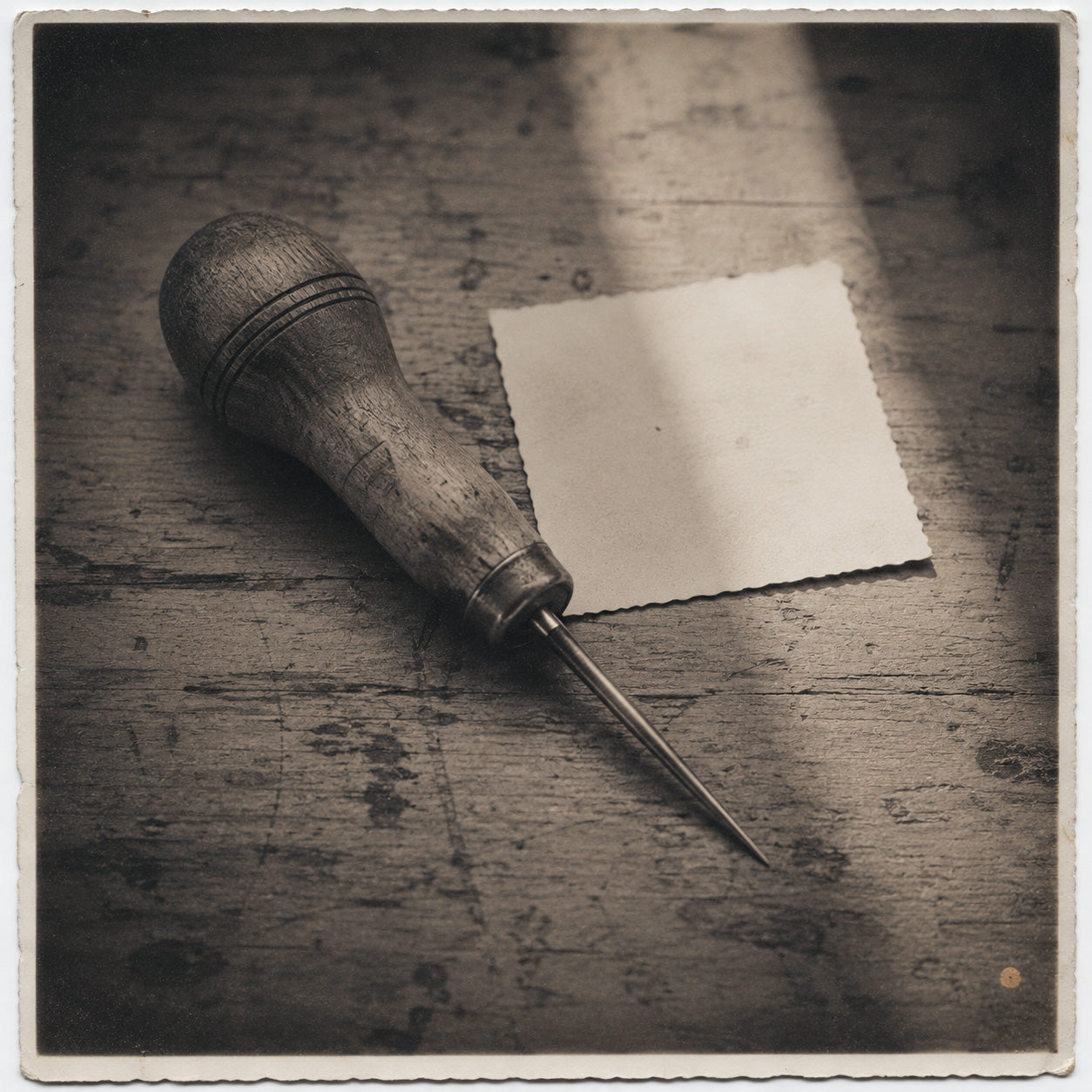
Inside is my grandfather's awl — the spike he used to start a hole before a peg ever went in. The handle is worn to the shape of a hand that is sixty years in the ground now. My hand. His hand. The same shape, give or take a war and a lifetime.
I do not yet know who will read this. But I have had a feeling, these last few mornings, sitting with my coffee while the light comes up over the east field — a feeling that it might just be you.
— from the Prologue
"Real work recruits; artificial lessons repel. The frolic knew this; the barn raising knew this; every apprenticeship in history knew this."
A Look Inside
The Book in the Hand
Plates from the book, and the book itself. Tap any picture to see it full size.
Why This Book Is Different
The Story Shelf
A tradition deserves better than silent deletion — and a reader deserves better than "secrets" that quietly skip the parts that don't hold up. This book keeps a shelf for the old ways it weighed and set down, each with its reasons, in the open.
| The Old Way | Where Its Story Is Told | Why It Was Set Down |
|---|---|---|
| Brain tanning, the literal method | Ch. 83 | Chronic wasting disease risk; the egg-yolk tan keeps the chemistry safely |
| The bee skep as a working hive | Ch. 66 | Inspection law protects the bees; the movable-frame hive out-designed it fairly |
| The mustard plaster | Ch. 77 | Documented burn risk; the warm compress keeps everything it truly delivered |
| Comfrey, taken internally | Ch. 78 | Liver-harming alkaloids; retired to the compost queen's honest new title |
| Dowsing as a drilling decision | Ch. 62 | The rod moves; the data drills. Let your uncle walk the field anyway |
This is the whole reason for the shelf: judging a method by whether it truly serves the household — not by how well it markets. We only kept that rule.
What Readers Are Saying
Early Reader Results
A few words from people putting the book to work in their own house.
The section on repairing loose chairs gave me the confidence to tackle our old kitchen set instead of replacing it. I tightened and restored four chairs over the weekend and avoided spending nearly $600 on new ones.
— Samuel Hart, Dayton, Ohio
I expected to focus on the workshop projects, but the garden chapter ended up being the most useful. Ezra's simple planting layout helped me make better use of a small backyard bed, and this was the first summer we had more beans and tomatoes than we could eat.
— Rebecca Collins, Asheville, North Carolina
At first, I thought the methods might feel too old-fashioned for everyday life. Then I used the root-cellar principles to reorganize our basement food storage, and everything stayed fresher and easier to find. I finished the book with a completely different opinion.
— Michael Turner, Madison, Wisconsin
Three Ways In
Get the Book — or Get It Both Ways
Read it at the bench, hear it on the drive to the hardware store, or take both and pay less than buying them apart. Same 101 skills, your choice of format.
Read It
The Ebook
PDF + EPUB — read on any device.
one time · yours forever
- The full 413-page illustrated ebook, 101 numbered skills across 11 parts
- Delivered as PDF and EPUB — Kindle, Kobo, tablet, or print at home
- Materials, current prices, and plain numbered steps for every chapter
- Instant download — no shipping, no waiting
Read It. Hear It.
The Complete Edition
Ebook + full audiobook, both formats.
one time · yours forever
- Everything in the ebook — PDF + EPUB, all 413 pages
- PLUS the complete AUDIOBOOK — every chapter in Ezra's own voice, unabridged
- MP3 & M4B download — listen anywhere
- Professionally recorded at 44.1 kHz — 320 kBit high-quality audio
- Read it at the bench, hear it everywhere else
- Cheaper than buying the two apart — instant download
Before You Buy
A Few Honest Questions
What format is the book in, and how do I read it?
The ebook edition includes both a PDF and an EPUB. The PDF is laid out like a printed book and reads well on a computer, tablet, or printed at home; the EPUB reflows nicely on phones and e-readers like Kindle or Kobo.
What's the difference between the Ebook and the Complete Edition?
Same 101 skills, three ways to have them. The Ebook is PDF + EPUB. The Audiobook is every chapter narrated, as an MP3 download. The Complete Edition is both together — and costs less than buying the two apart.
Do I need any woodworking or homesteading experience?
No. Every chapter starts from zero — what you need, what it costs, and plain numbered steps. Some skills (like sharpening a blade or drying the garden) take ten minutes; a few, like framing a barn wall, are bigger undertakings clearly marked as such.
Are the tools and remedies in this book safe?
Every chapter involving heat, tools, lye, or a remedy carries its own safety note, and the book closes with a full note on the numbers, the remedies, and the rules. Traditional remedies are shared for minor household use only and are never a substitute for a doctor — the book says so plainly, more than once.
What if it isn't for me?
Write in within 7 days of your purchase and you'll be refunded, no questions asked.
Go find your Eli.
A hundred and one skills, and one more underneath them all: the handing on. Start this Saturday, with a stone and ten minutes.
